Google Urban Ecology
Pier 57, New York City
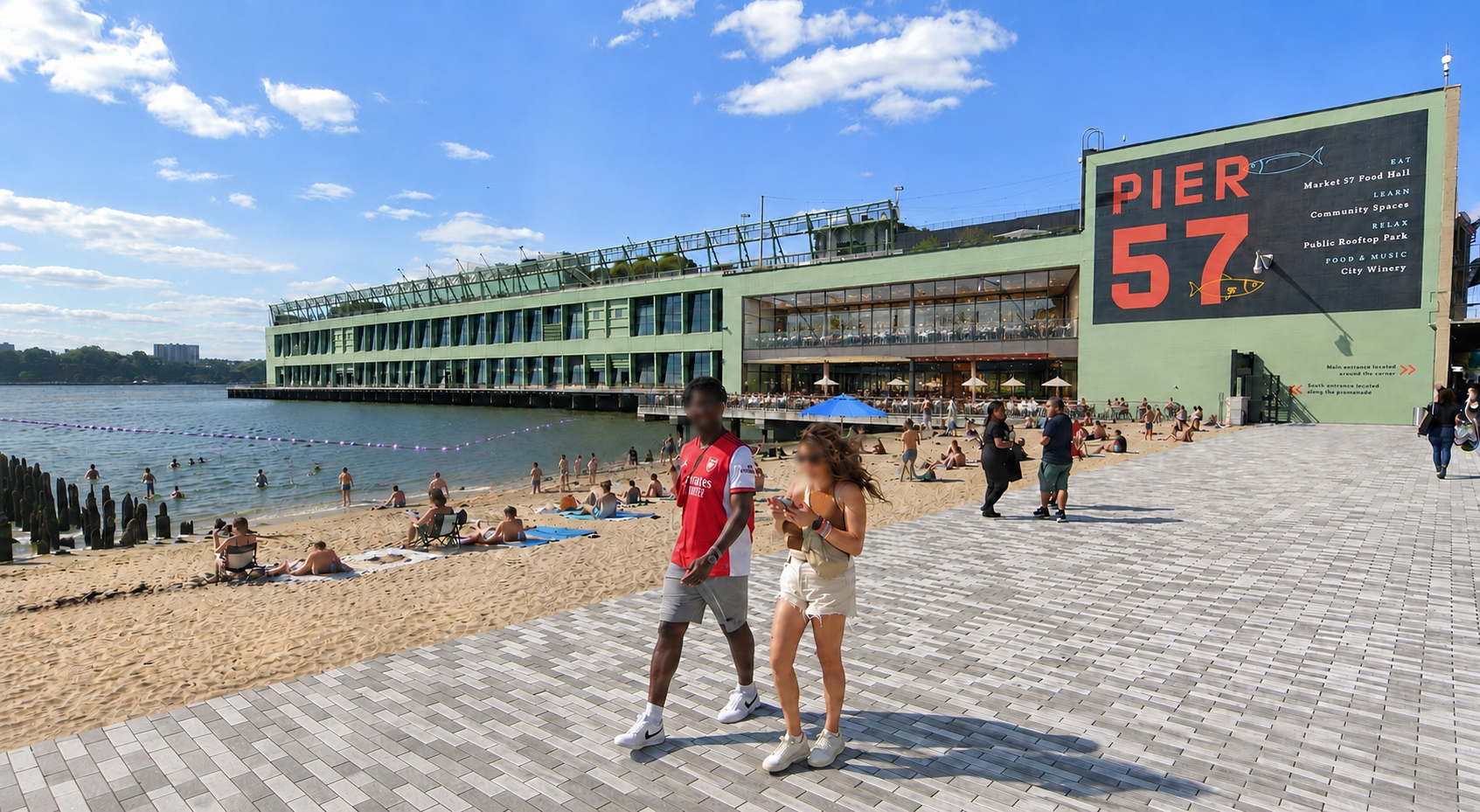
Manhattan’s First Swimmable Beach in Generations
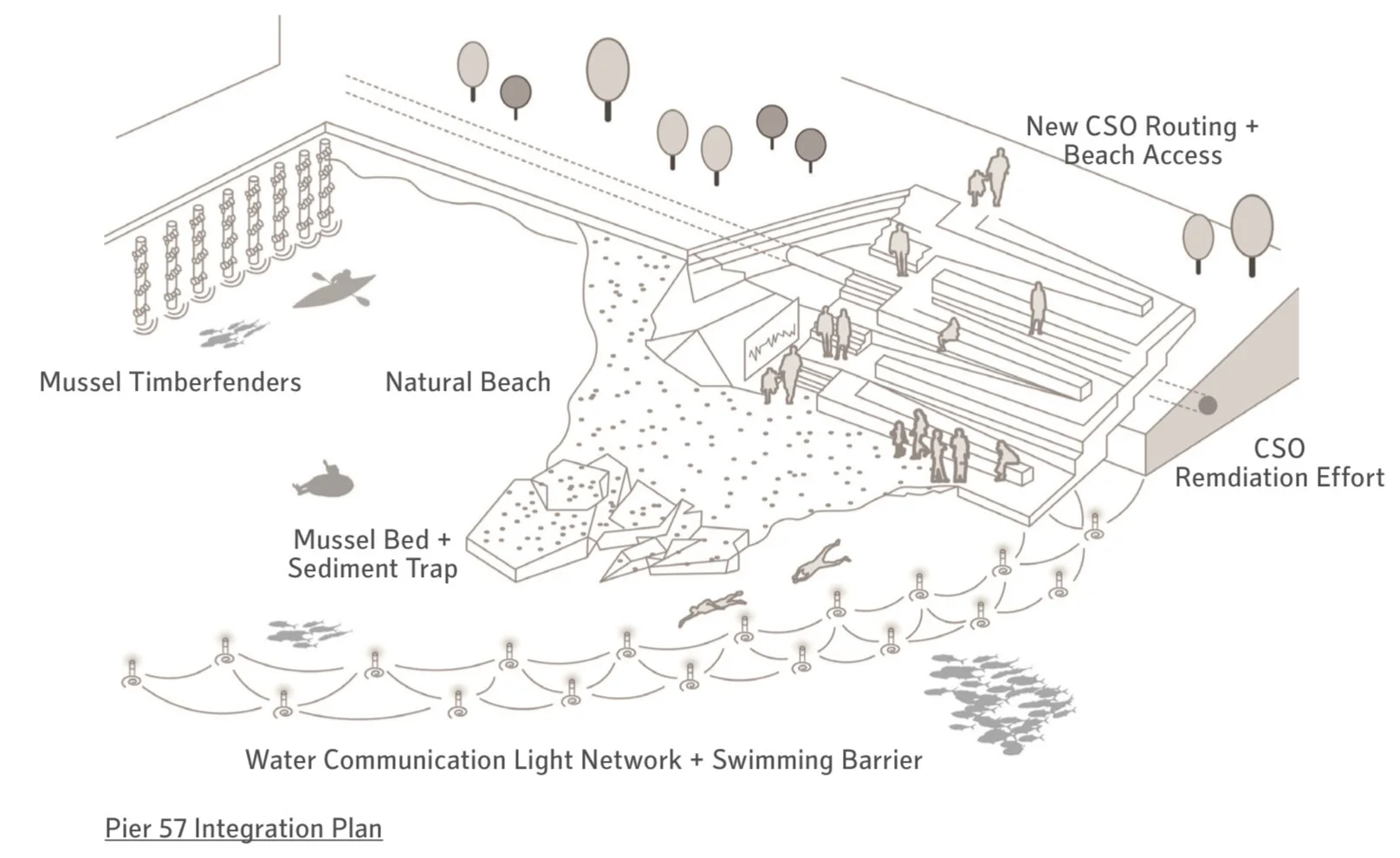
Pier 57 reimagines New York’s relationship with the Hudson River by bringing a beach back to Manhattan for the first time in generations. The project transforms obsolete infrastructure into a living interface between city and river, creating a new public shoreline where people can once again swim, touch the water, and experience the ecology of the Hudson firsthand. What was once an industrial edge becomes a civic landscape that reconnects New Yorkers to the river.
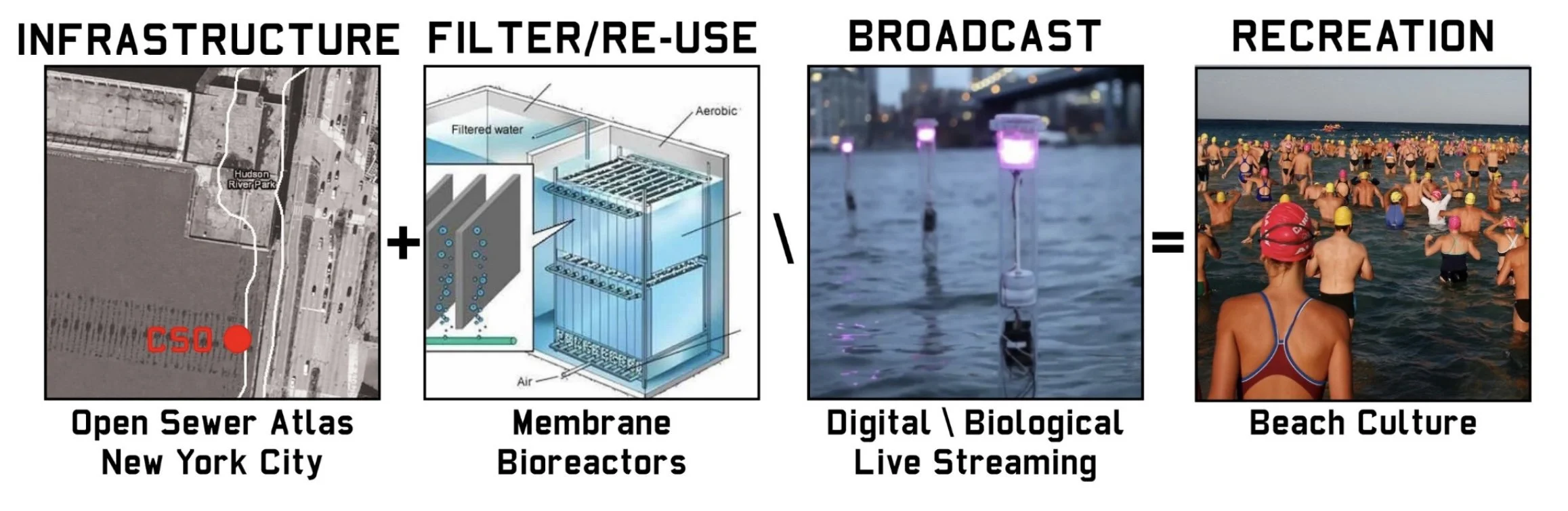
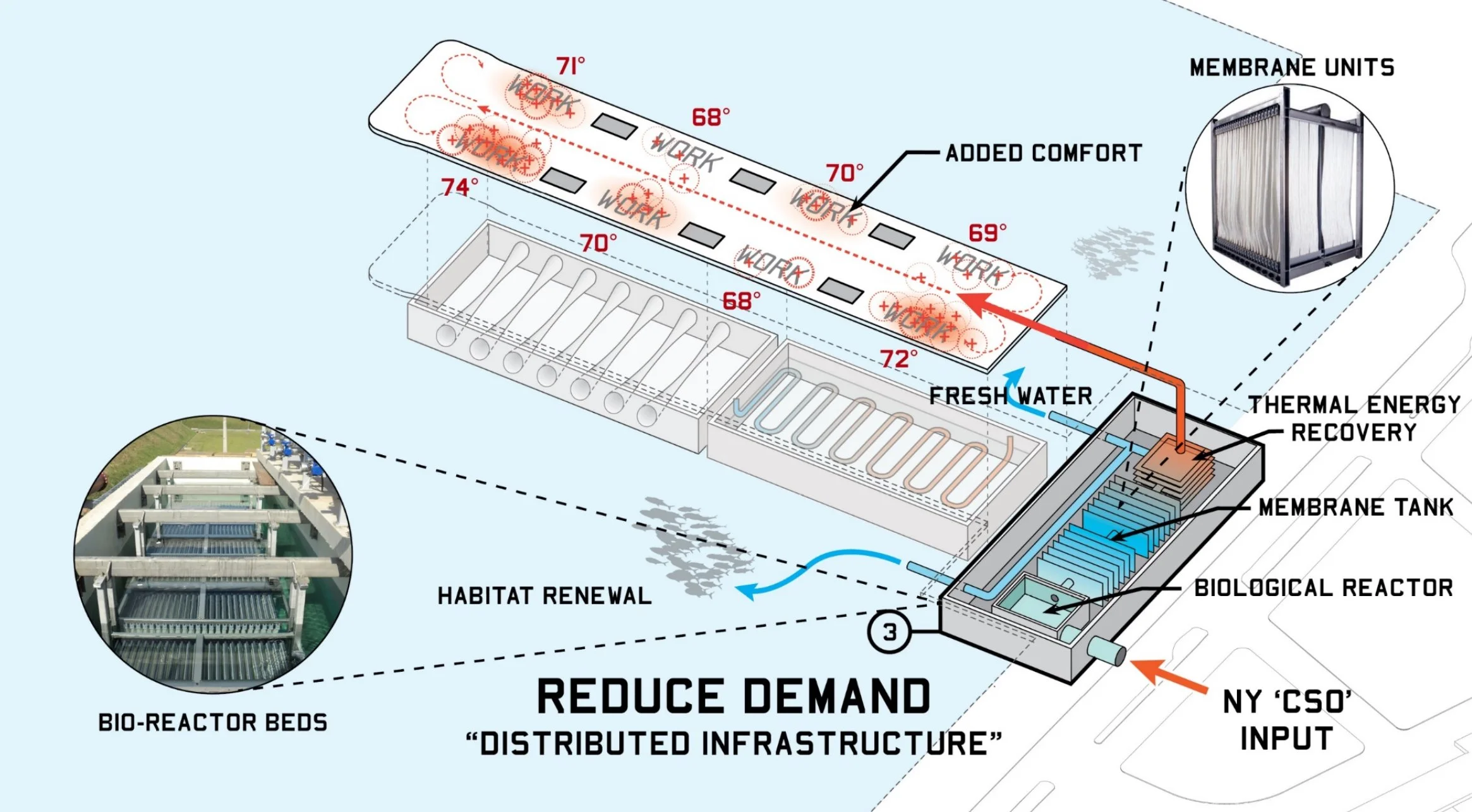
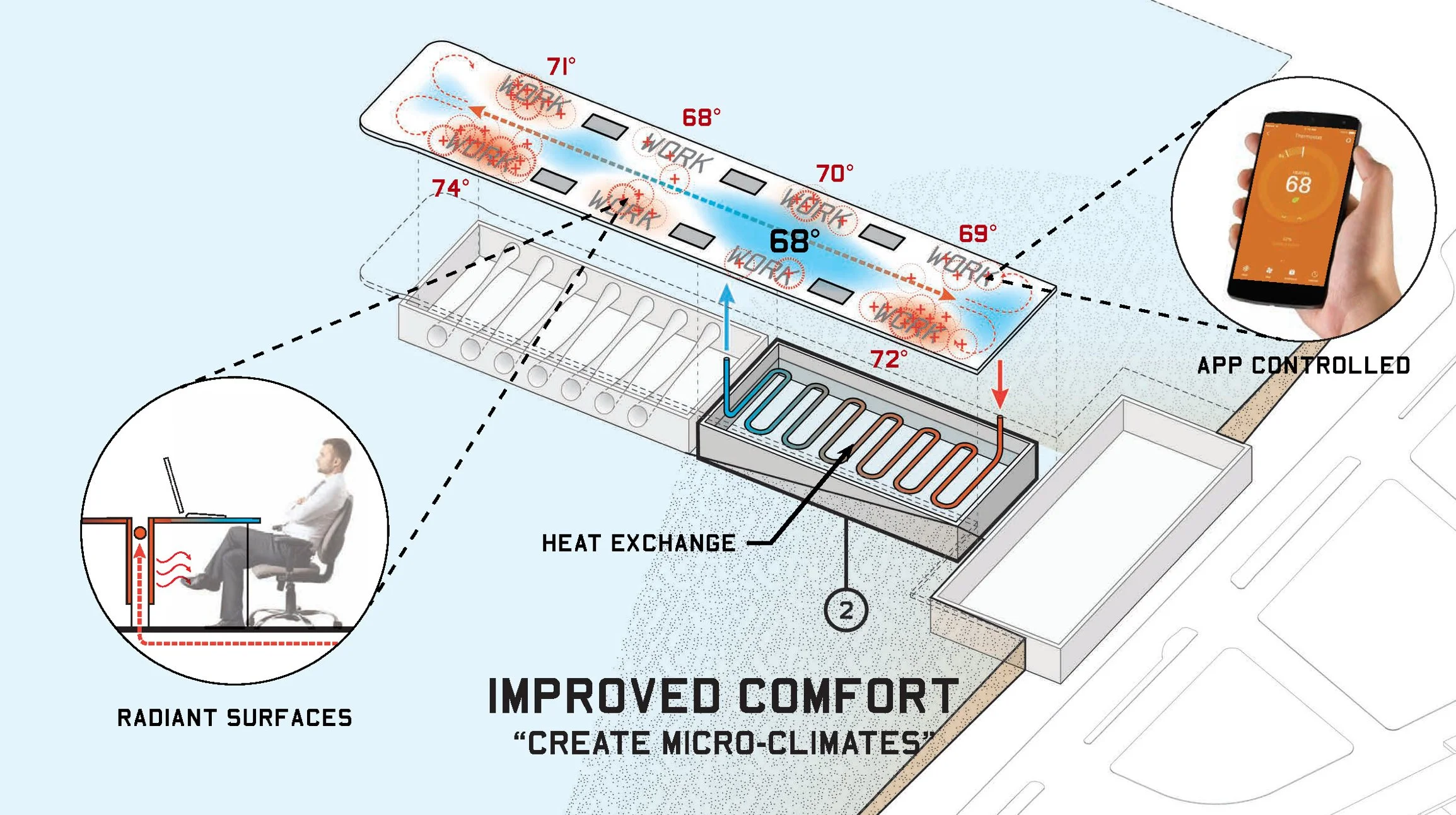
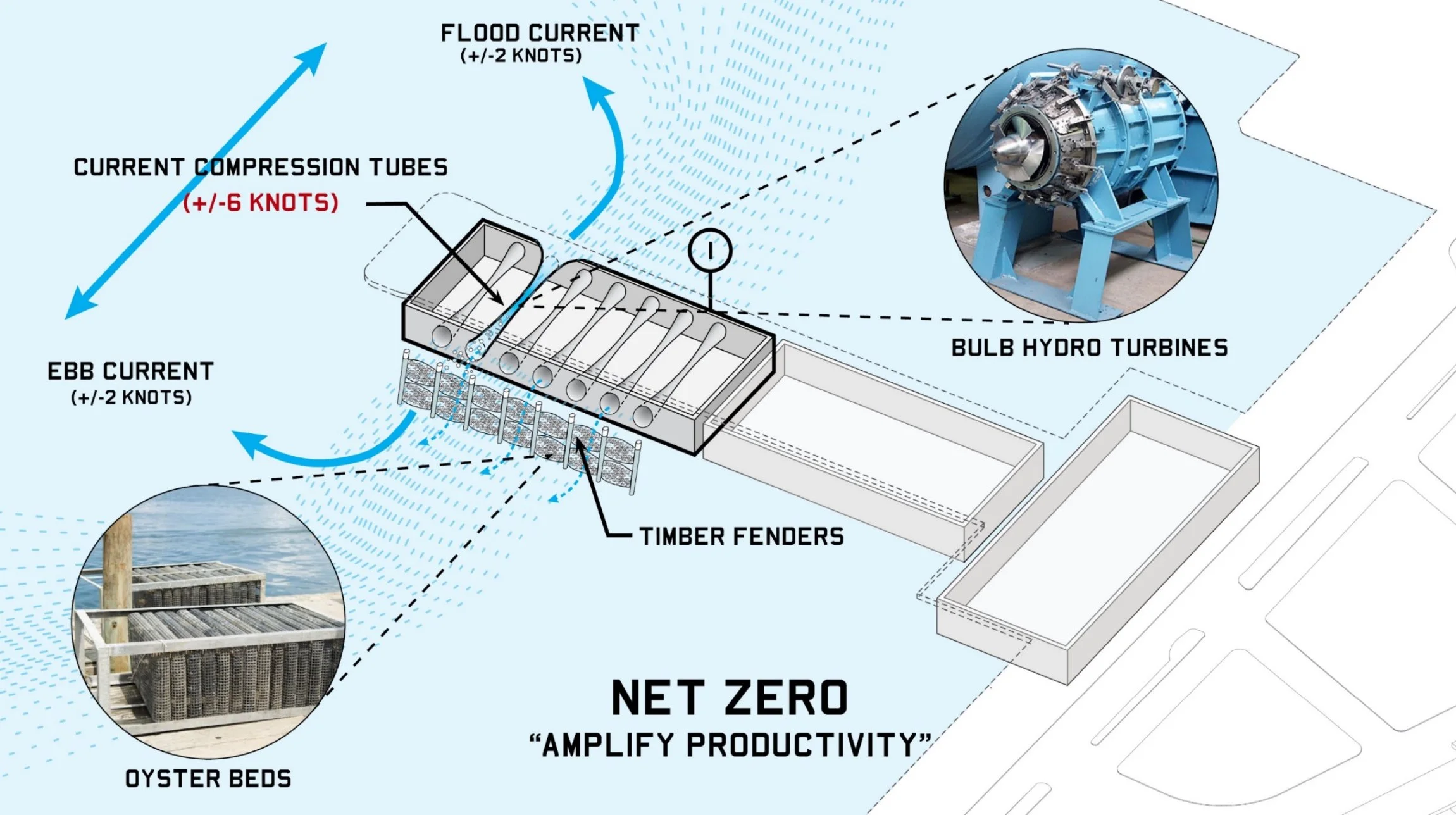
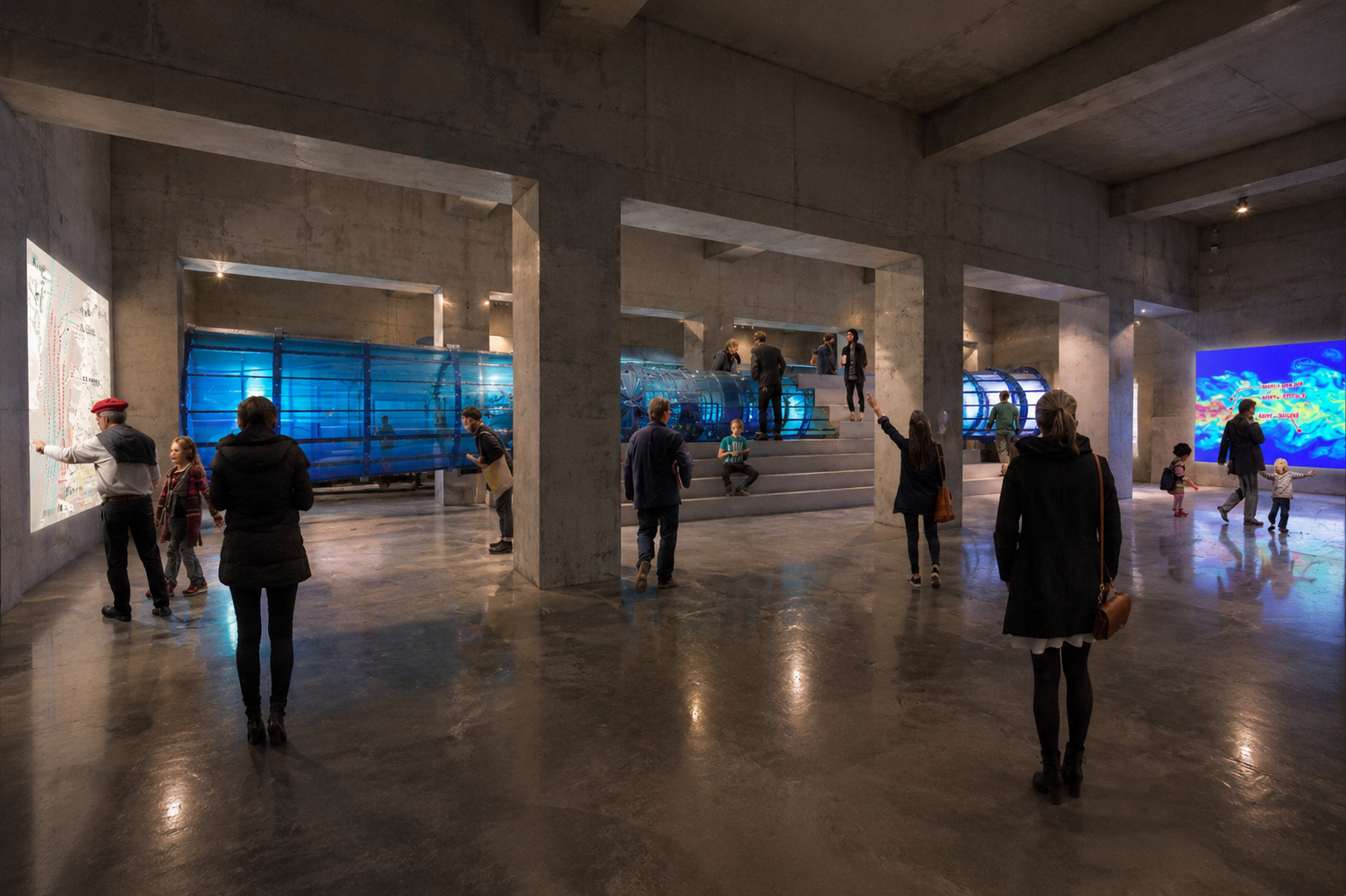
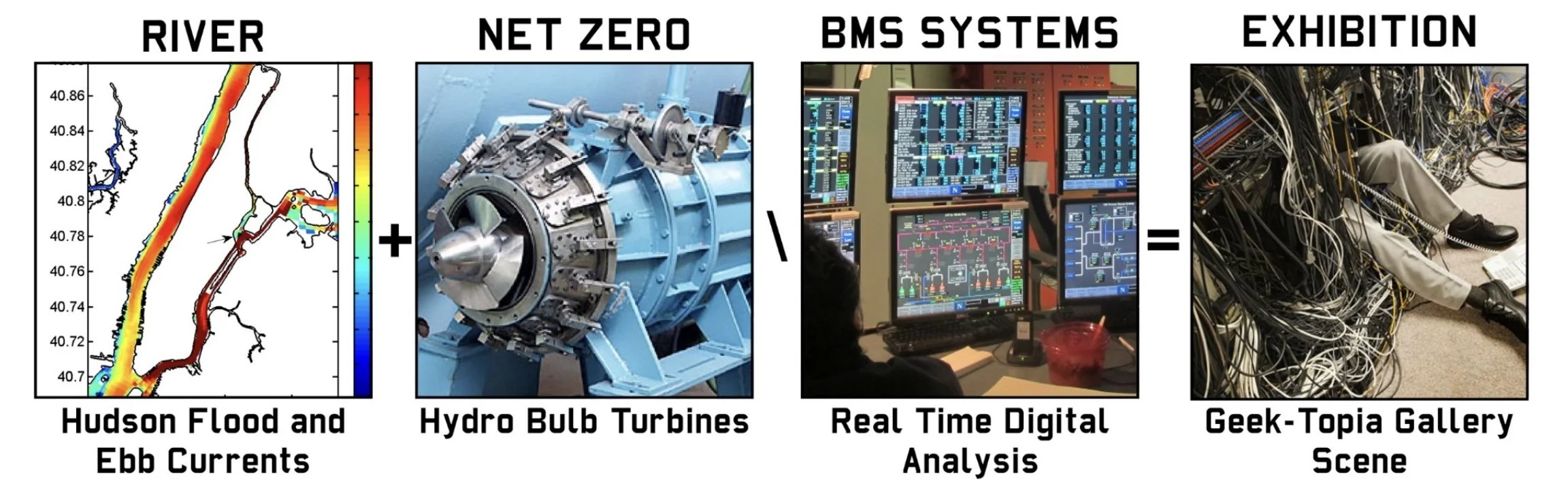
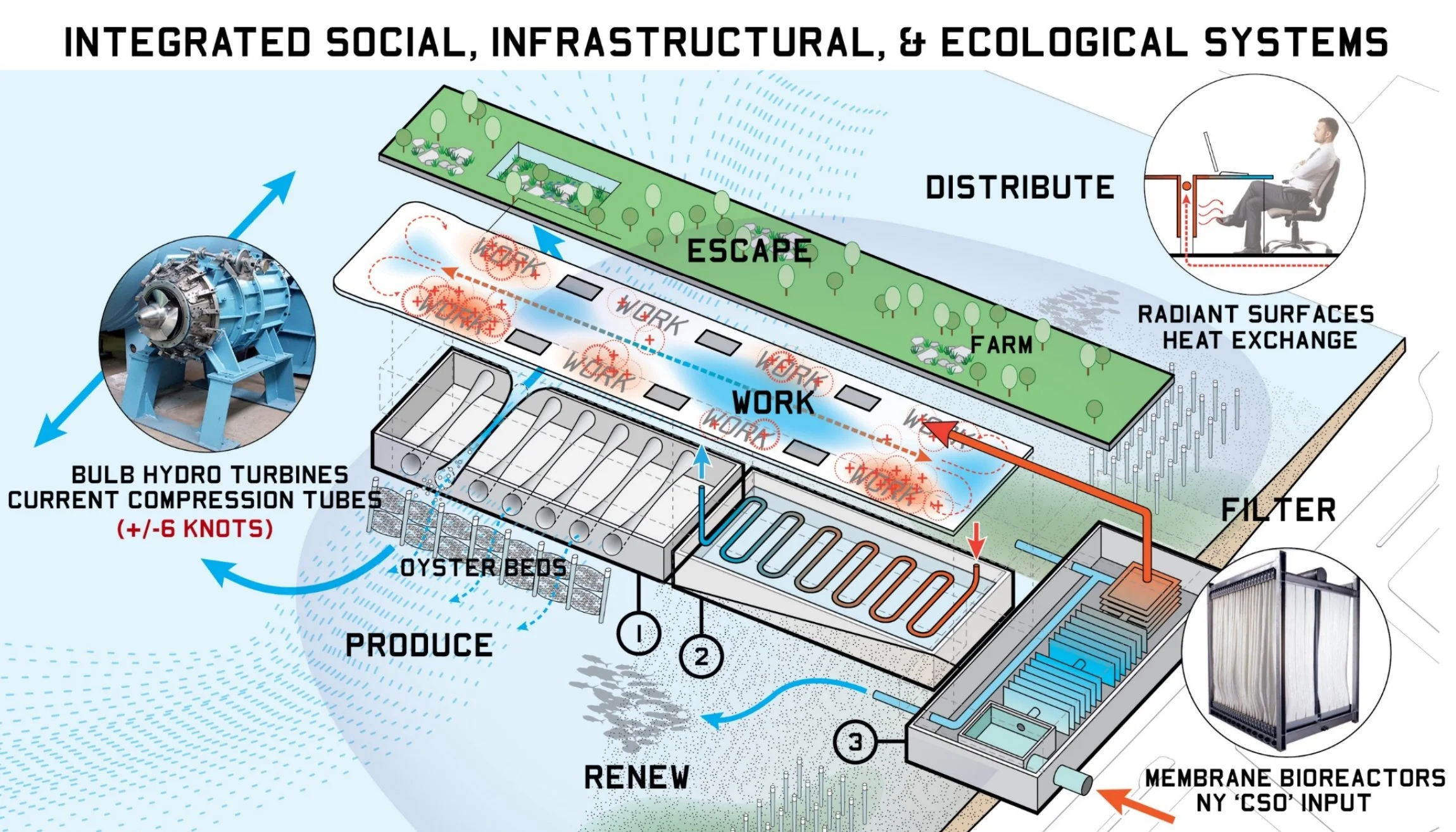
Commissioned by Google and developed in collaboration with The Living, Natural Systems Utilities, Verdant Power, and Atelier Ten, the proposal captures and treats the local Combined Sewer Overflow (CSO), reducing potable water demand by 75 percent. The renovated pier generates 105 kilowatts of tidal energy, harvests 150 tons of free cooling from its historic caissons, and transforms previously hidden infrastructure into a productive environmental system that cleans water, generates power, and supports habitat.
150,000 Mussels Monitoring & Filtering the Hudson River
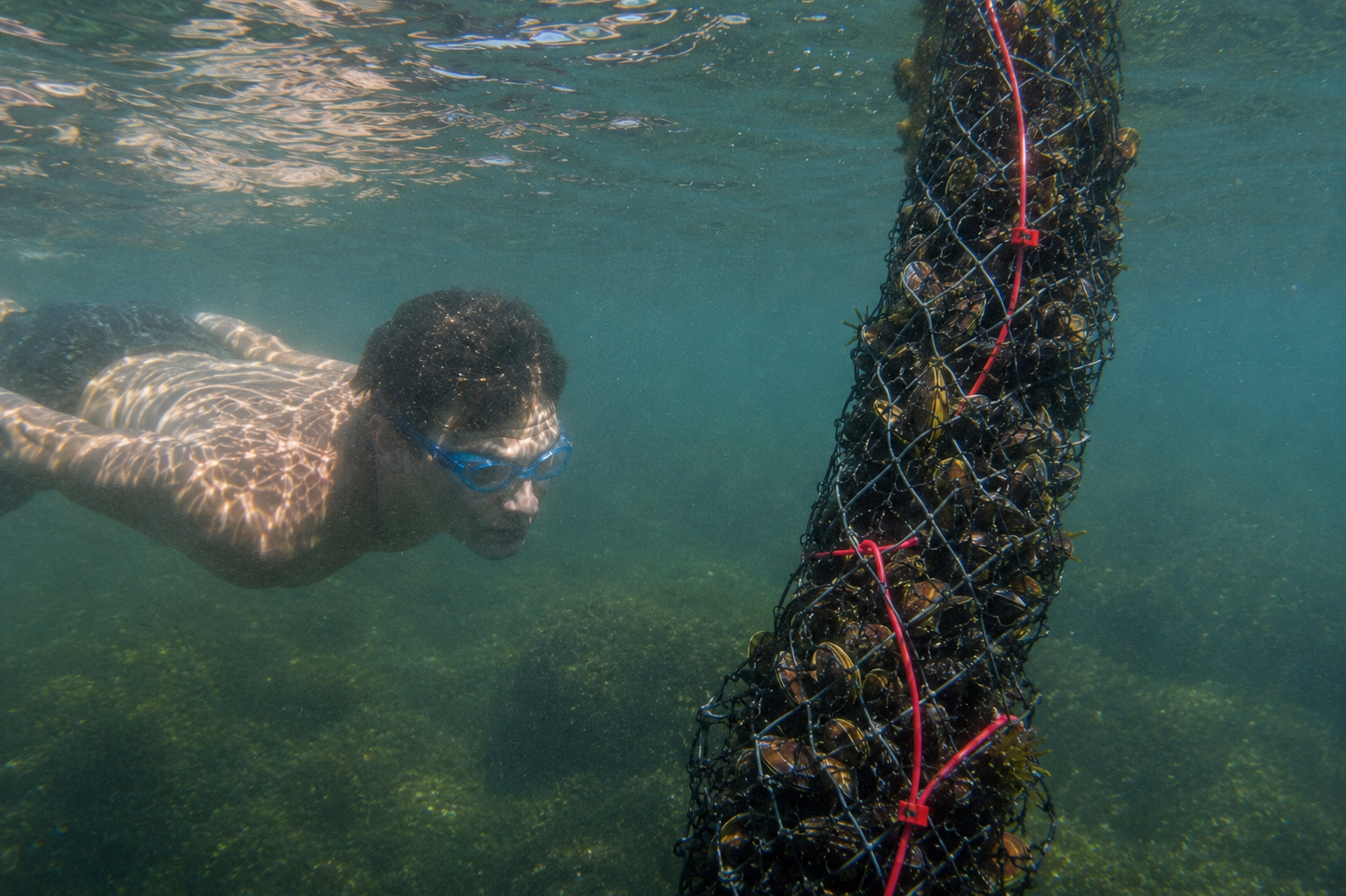
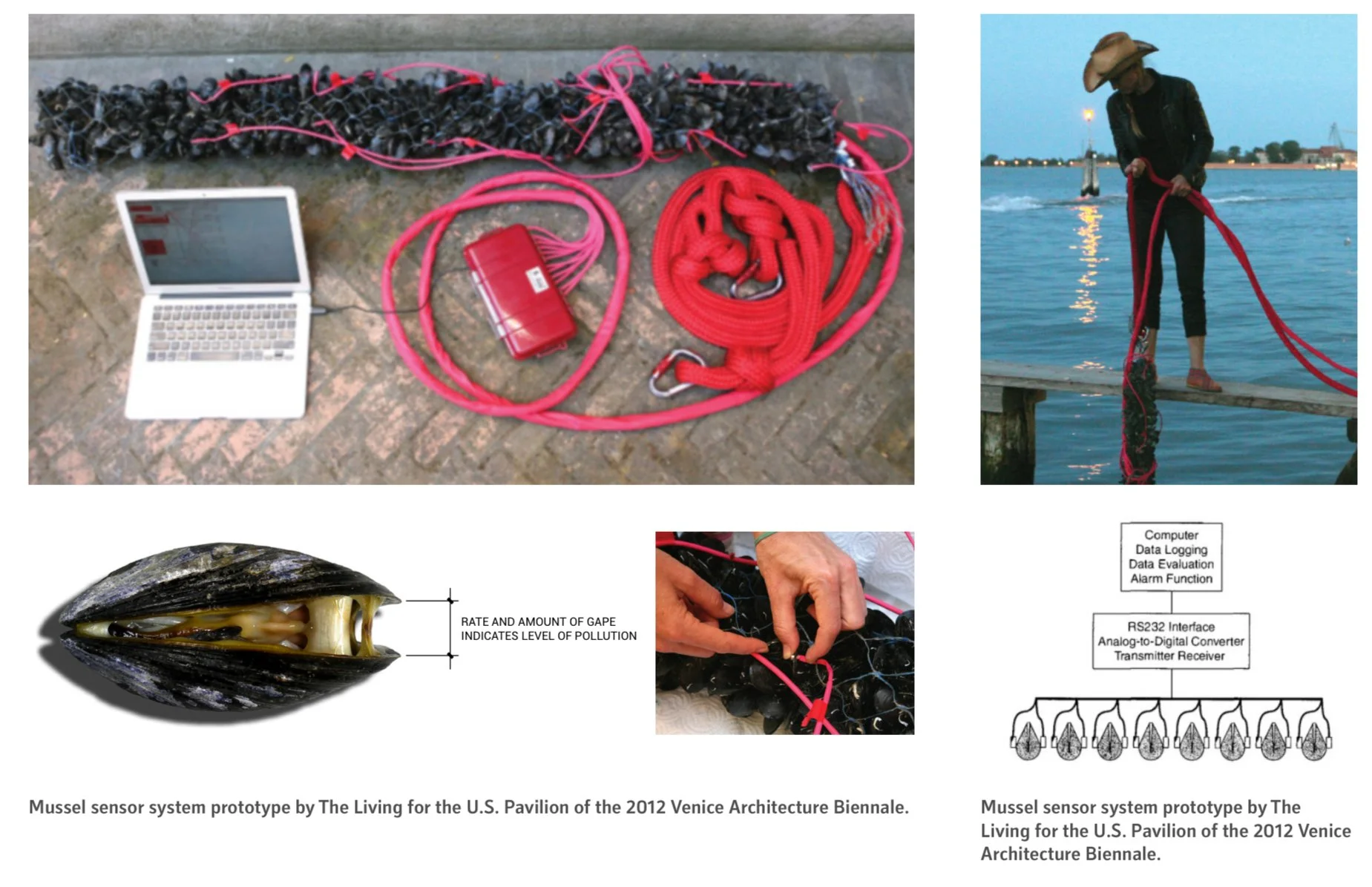
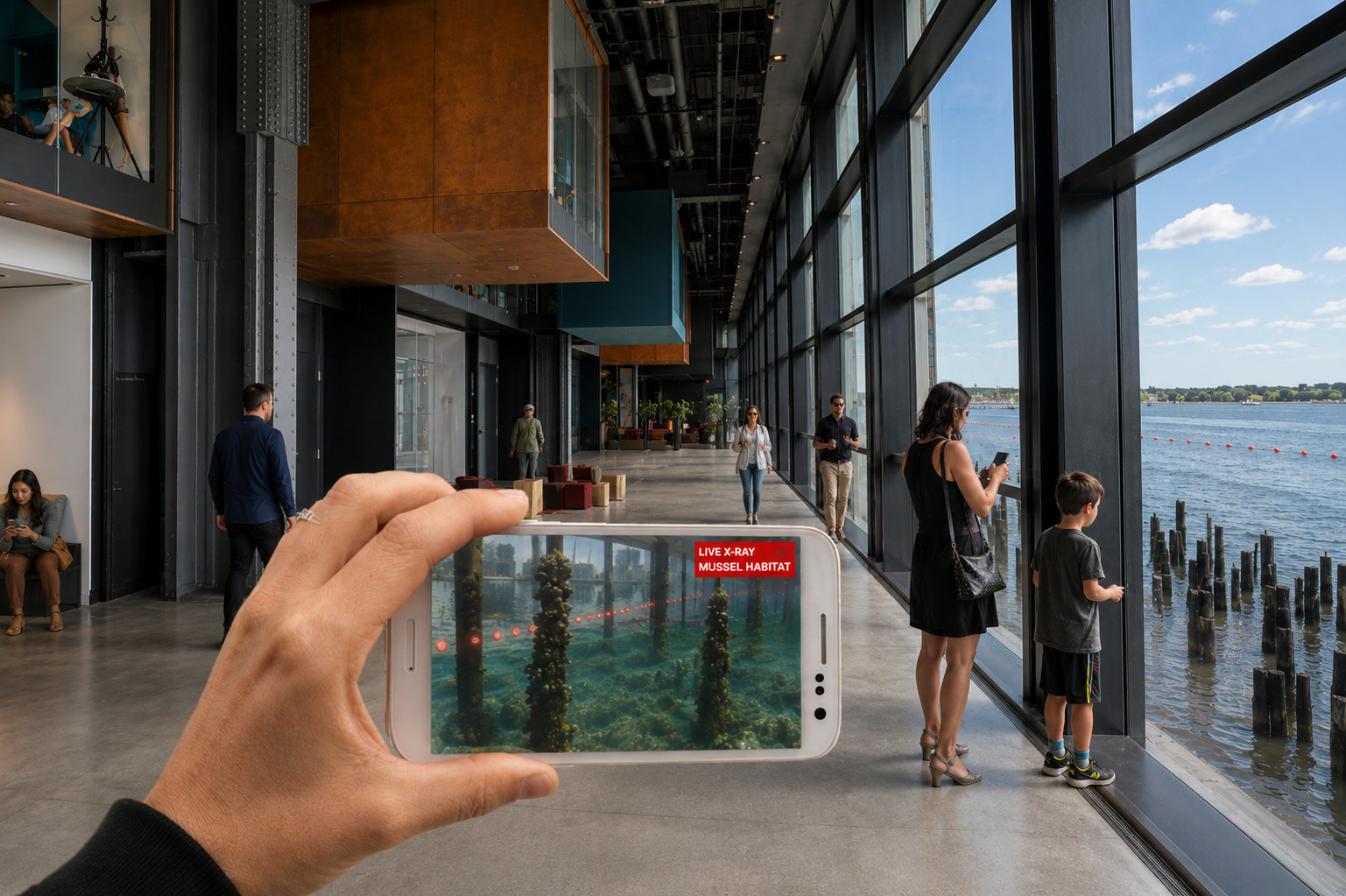
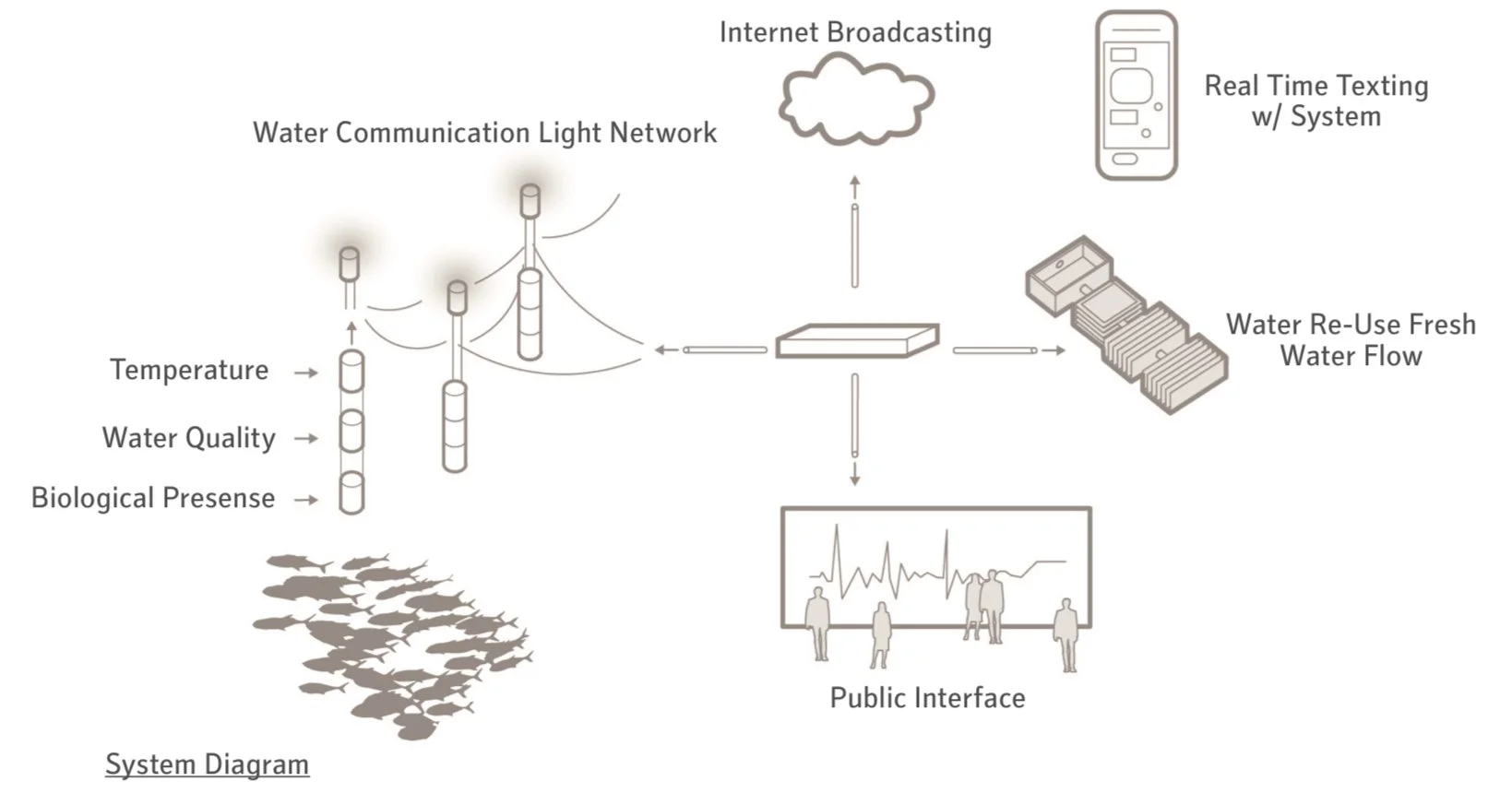
At the heart of the proposal is a habitat for more than 150,000 mussels that continuously filter the Hudson River while serving as living environmental sensors.
Wired with monitoring technology, the mussel colonies communicate real-time river conditions through a network of illuminated markers and mobile devices, signaling when water quality is suitable for public swimming. Acting as non-human lifeguards for the city, the mussels transform the river itself into a visible and accessible environmental commons while helping restore the health of the Hudson Estuary.